

Human-made is becoming a brand signal
AI made content cheap to produce. That’s exactly why the next advantage is visible human judgement: the taste, expertise and point of view a prompt can’t fake.
 Words:
 AI has made content easier to produce.
That helps. It also adds a lot of noise.
When every business can generate a passable paragraph, a decent image or a dozen social captions in a few minutes, the advantage starts to move somewhere else: away from the default output.
The value shifts toward judgement.
Who decided this was worth saying? In good work, it’s someone who knows the audience well enough to make it specific, with the taste to stop before it’s overdone.
That’s why human-made is becoming a brand signal.
Sameness is cheap now.
The market is already feeling the difference
Lippincott’s 2026 trend report puts it plainly: as AI becomes more visible, “human-made” is expected to reappear as a badge of honour and a driver of value for knowledge workers and craftspeople.
That feels right.
Most audiences don’t care whether a team used AI to speed up research, generate options or clean up production. They care whether the final thing feels considered: whether it has a point of view, and sounds like someone with experience was involved.
AI can help the process. It can’t be the taste.
Expertise is a content advantage
One of the best ways a brand can prove there are people behind it is to publish what those people know.
You don’t need a hot-take machine for this. The brand needs room for that expertise to surface in a regular, readable way.
For AJ & Co., that mattered.
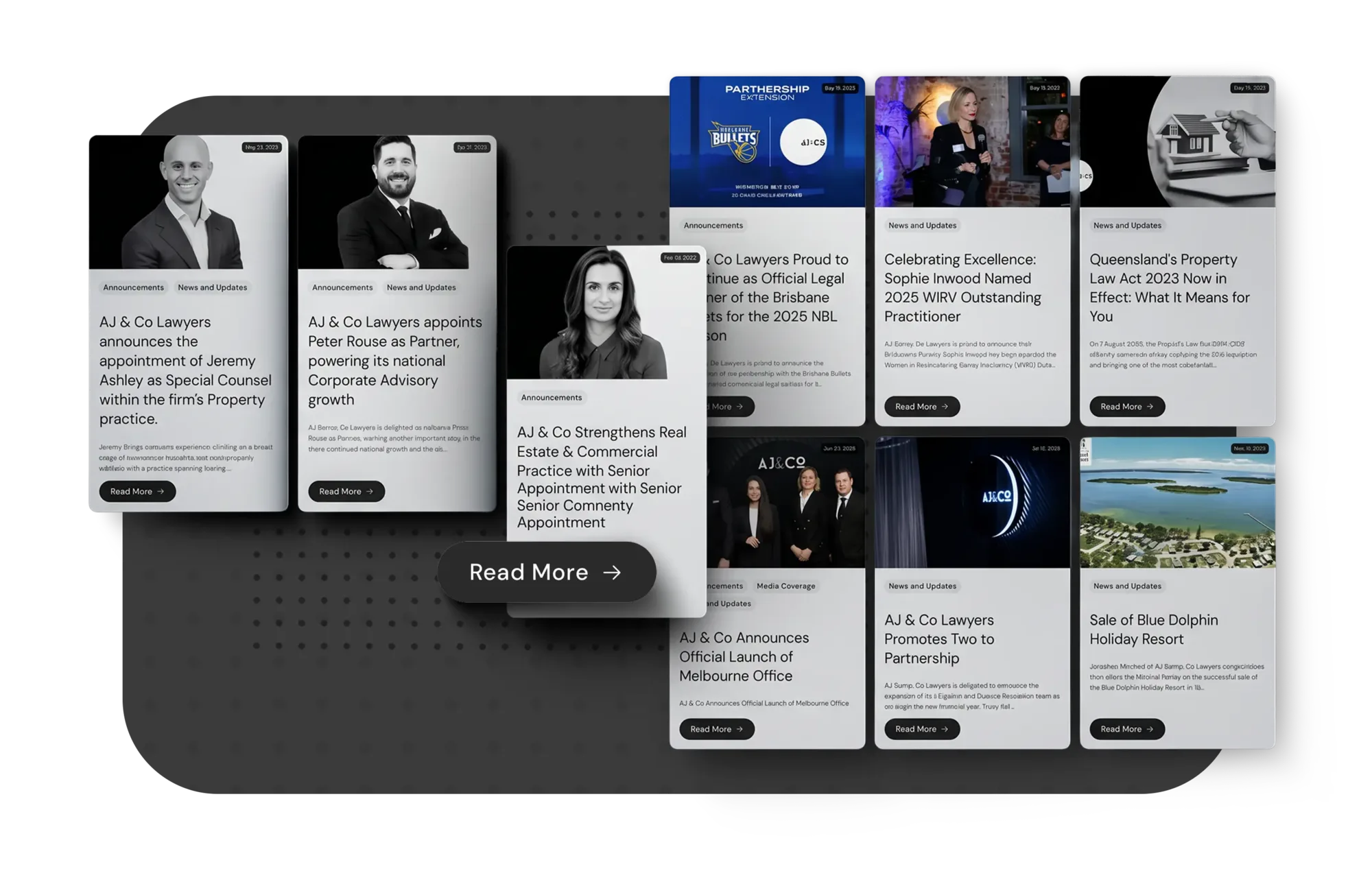
The firm wins work through direct, commercial advice. The website needed to feel like that: plain, prepared, zero waffle. A big part of the platform is the firm’s own insights and postings from its lawyers: subject-matter knowledge, made easy to publish.
That’s a human-made signal.
It says: these are the people and this is how they think, before you even get in the room.
Human doesn’t have to mean handmade everything
The easy mistake is to turn this into a purity test.
Human-made doesn’t mean every line must be typed from scratch or every workflow must slow down to prove its integrity. That’s not how modern creative work happens.
A better distinction is between human-led and machine-led.
Human-led work uses tools to move faster, test more and reduce the drag around production. But the direction, the judgement and the call on what’s right for the brand still come from people.
Machine-led work drifts toward whatever is easiest to generate, approve and repeat.
That’s where brands start to sound the same.
The signal is in the specifics
You can usually feel when content has been made from the inside.
It uses the language of the business and mentions details a generic writer would miss. It has opinions, because the people behind it have seen things work and fail, and it answers the questions customers ask.
Patagonia’s Worn Wear is a good outside example. It’s a practical system where used gear can be bought, traded in and kept in circulation. The brand point is stronger because it’s tied to behaviour.
The same principle applies to expertise-led content.
The message is more believable when the brand has built the machinery to keep doing it.
Authored beats synthetic volume
Whoever publishes the most won’t win the next wave of brand content. There’ll be too much content for that.
The better opportunity is to publish things that feel authored and connected to the brand’s own work: a founder note with an opinion, a case study that shows the thinking, a lawyer explaining a business risk in plain language.
That’s where human-made becomes visible, as a quality in the work.