


The best creative retainers are quiet machines
Most retainers are sold on access and hours. The better value is quieter: a working memory that turns every brief, review and final file into a calm, repeatable system.
 Words:
 Most creative retainers are sold around access.
Hours, priority and a familiar team who can pick up the next campaign asset, sales deck or print file without a long reintroduction.
That’s worth having. But there’s more to it.
The better value is quieter than that.
A good retainer gives the client a working memory: how jobs are briefed, where drafts live, which version is under review, what’s been approved and where the final press-ready files ended up.
That sounds basic.
It is basic. That’s why it works.
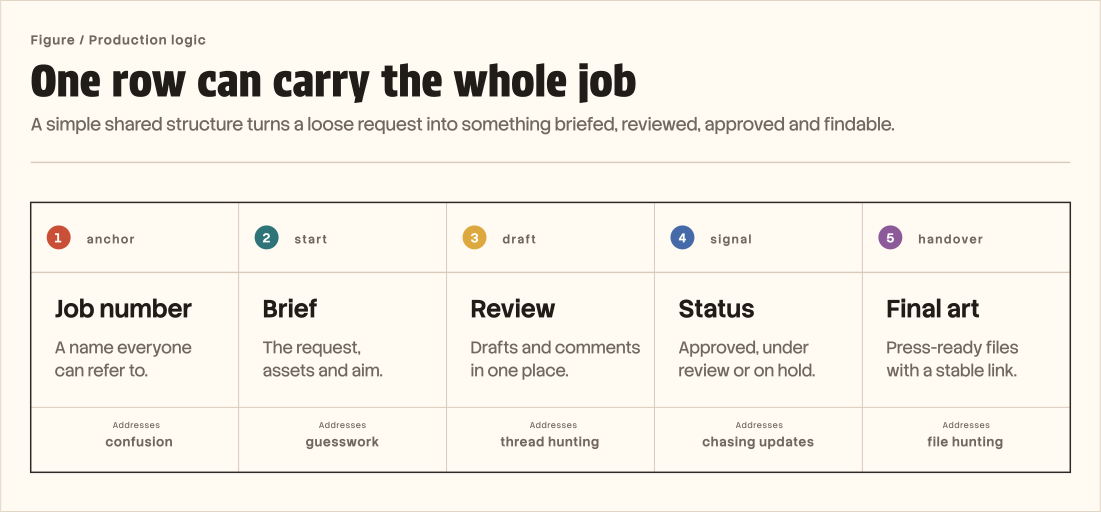
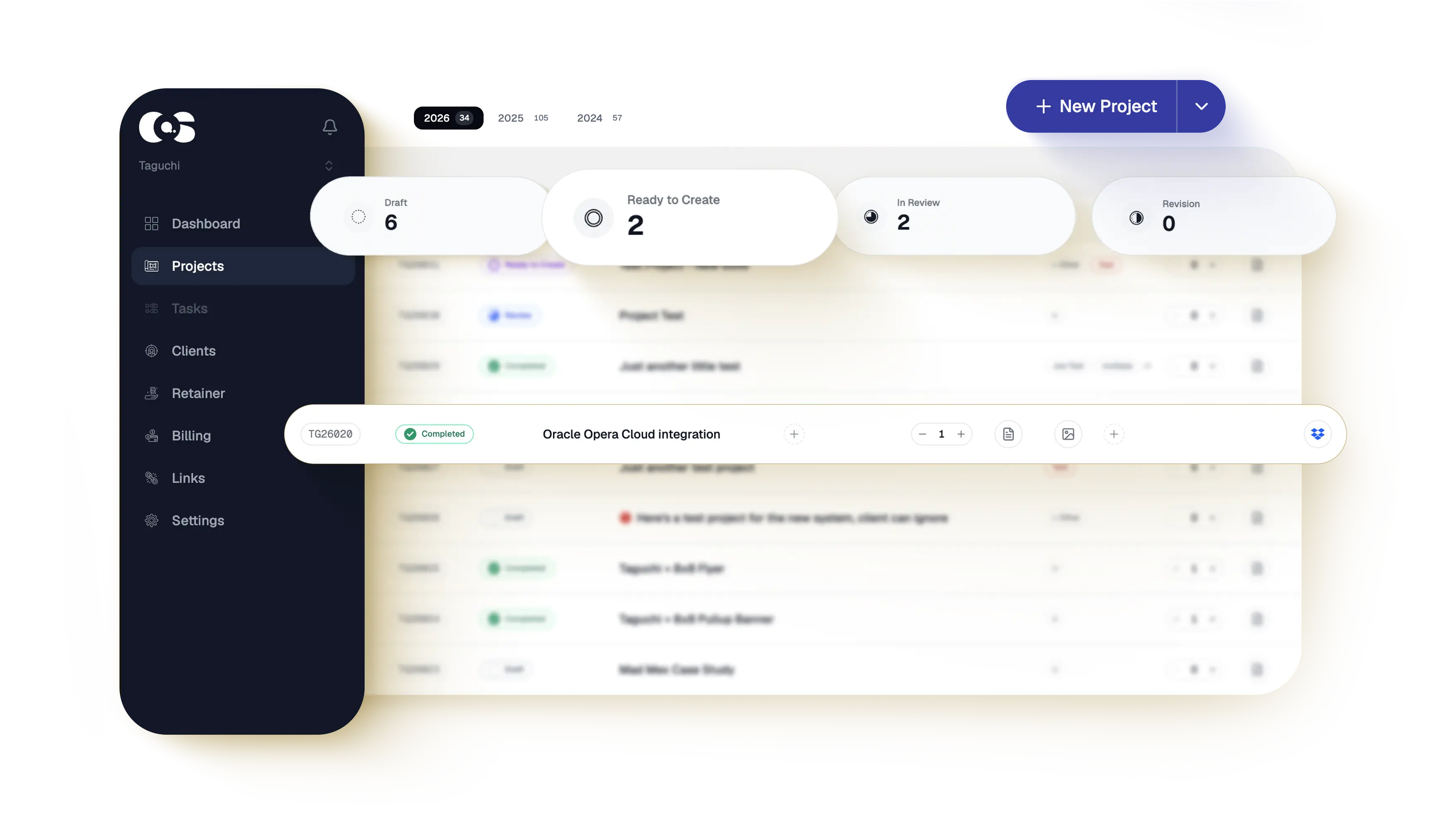
I was reviewing one of our live production systems for a long-running client relationship. The interesting part was the shape of the work. A whole year of creative jobs was held together by a simple production log: job number, description, brief, review, status, final art and notes.
Nothing flashy.
Underneath, it was doing a lot.
The row is the operating system
A production row sounds boring until you think about what it replaces.
It replaces the email that says “can you just…” with half the context missing, the brief hiding in someone’s inbox, three people asking which draft is current and the final artwork link pasted into a chat thread, then lost the next time someone needs it.
A row gives the job a spine.
The job number means the work can be named. The description gives the request a plain-language label. The brief link keeps the starting point findable. The review link gives comments somewhere to land. The status stops people asking for updates that are already visible. The final art link means the finished work can be found and used.
None of this is glamorous. It isn’t meant to be.
The glamour is in the work. The system is there to stop the work leaking time.
Small jobs still need care
One of the hard things about creative work is that not every request is a major project.
It might be a LinkedIn tile, a booth banner, a full-page ad or a print-ready file that needs to be right by tomorrow.
Handled as separate projects, that mix gets inefficient very quickly. The overhead starts to compete with the work itself. Briefing and review take too long, and delivery gets messy. People spend too much time moving information around instead of making the thing better.
A retainer changes the proportion.
The relationship is already running, so each job doesn’t bear the weight of a new engagement. The client doesn’t need to reintroduce the brand, and the team doesn’t need to rebuild the background. The route from request to finished file already exists.
That’s how small jobs stay viable.
They still get care. They just don’t need ceremony.
Feedback needs somewhere to land
Feedback gets a bad reputation because it often arrives in the wrong place.
It lands late, in fragments, from someone who’s only just seen the work. It asks the team to solve briefing problems inside revision rounds.
That’s when review becomes expensive.
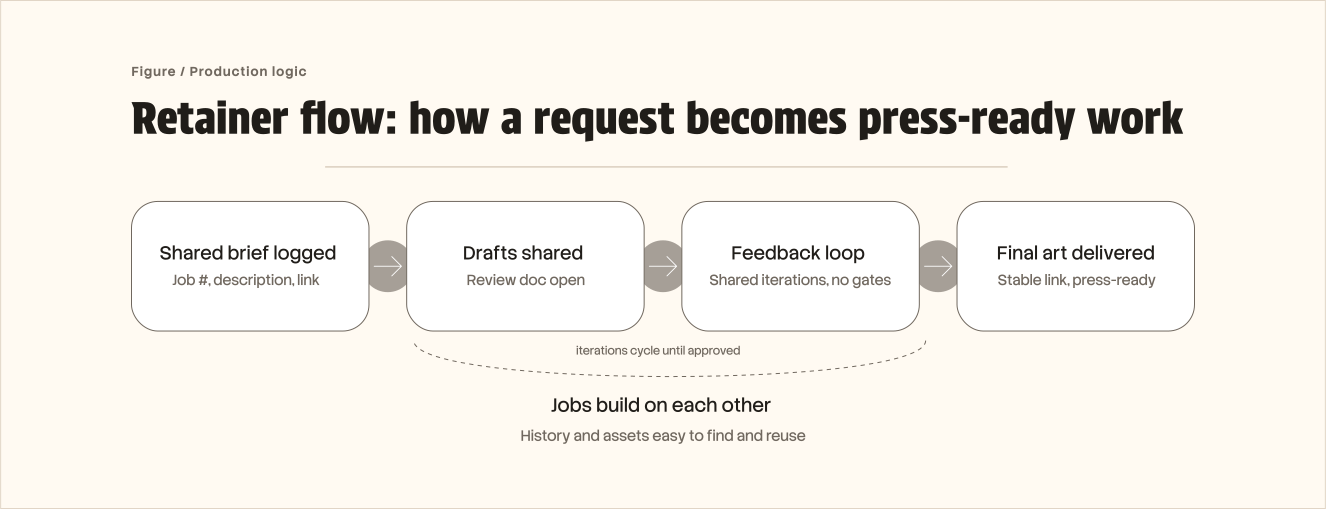
In a running retainer, review can be lighter. The draft has a clear home. Comments sit beside the work. The team can see what needs changing without hunting through messages. The client can see whether the work is under review, approved, on hold or not proceeding.
There’s a small but important difference between “we need feedback” and “feedback has a place to land”.
The second one keeps the work moving.
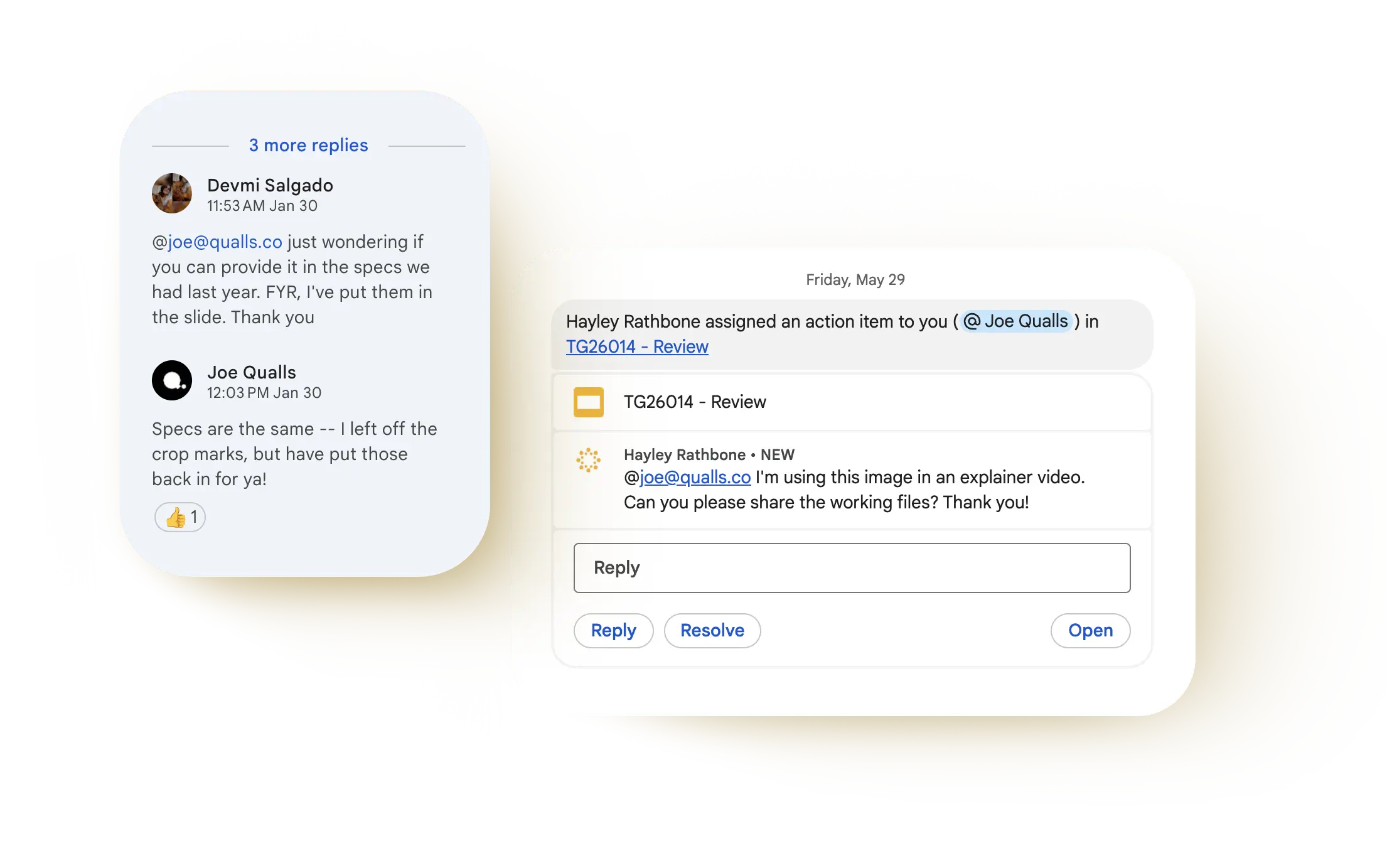
It also changes the tone of the relationship. When everyone can see the same thing, there’s less need for defensive explanation, fewer status meetings and fewer moments where the client feels out of the loop and the creative team feels interrupted.
That’s trust made visible.
Final art is part of the service
A job isn’t finished until the client can use the thing.
That means final artwork needs to land somewhere stable. Whatever the output is, the handover should be as findable as the brief.
This is one of the most underrated parts of retainer work.
In a one-off project, the final handover can feel like the end of a transaction. In a retainer, it becomes part of a growing library. Past work becomes reference material. New jobs can borrow from old decisions. The team can spot patterns. The client can retrieve assets without asking someone to dig.
The archive starts earning its keep.
The economics are in the tiny reductions
Creative retainers are often judged by the obvious things: how many hours are included, how quickly the team responds, how many assets were delivered.
Those things matter.
But much of the value hides in smaller reductions.
Less time briefing the same context again, searching for files, asking whether the work is approved or explaining the brand to people who already know it.
Those reductions don’t feel dramatic on one job.
Across a year, they matter a lot.
The tool isn’t the point
It would be easy to mistake this for a software story.
It isn’t.
The system could live in a spreadsheet, a project board or something even plainer. The tool matters only if people use it. The decision that counts is the shape of the workflow.
That shape is what our QC Process is built around.
Every job needs a place to begin.
Every draft needs a place to be reviewed.
Every status needs to be visible.
Every final file needs somewhere stable to land.
Once those things are true, the process starts to feel calm.
Clients know where to brief. Designers know where to look. Feedback has a home. Finished work stays usable long after the week it was made.
That’s the kind of system a good retainer should create.
Not a louder relationship. A quieter one.
One where the next job can start cleanly because the last one didn’t disappear.