


Brand systems are becoming content engines
A brand system used to protect logos and colours. Now it has to help a whole organisation publish, explain and keep moving without losing the thread.
 Words:
 A brand system used to mean a logo pack, a colour palette and a PDF with usage rules.
Those things still matter. They just aren’t enough anymore.
Brands now have to produce content for far more places: the website, social, email, campaigns, sales decks, customer support and whatever channel appears next.
Volume is only part of it. The harder part is consistency under pressure.
How do non-designers make good choices when the design team isn’t in the room? The system has to answer that for them, which is why brand systems are becoming content engines.
The system has to help people move
A brand system should protect quality without freezing the organisation.
If every new page needs a designer, developer, strategist and three approval meetings, the system is too fragile. If everyone can do anything, it’s too loose.
The middle ground is structure with room to move: clear components, templates that don’t feel generic and a CMS that matches how the business thinks. Enough flexibility to publish, enough guardrails to stay recognisable.
This is where brand and operations start to overlap.
Structured content is brand work
Seadar Contractors is a good example.
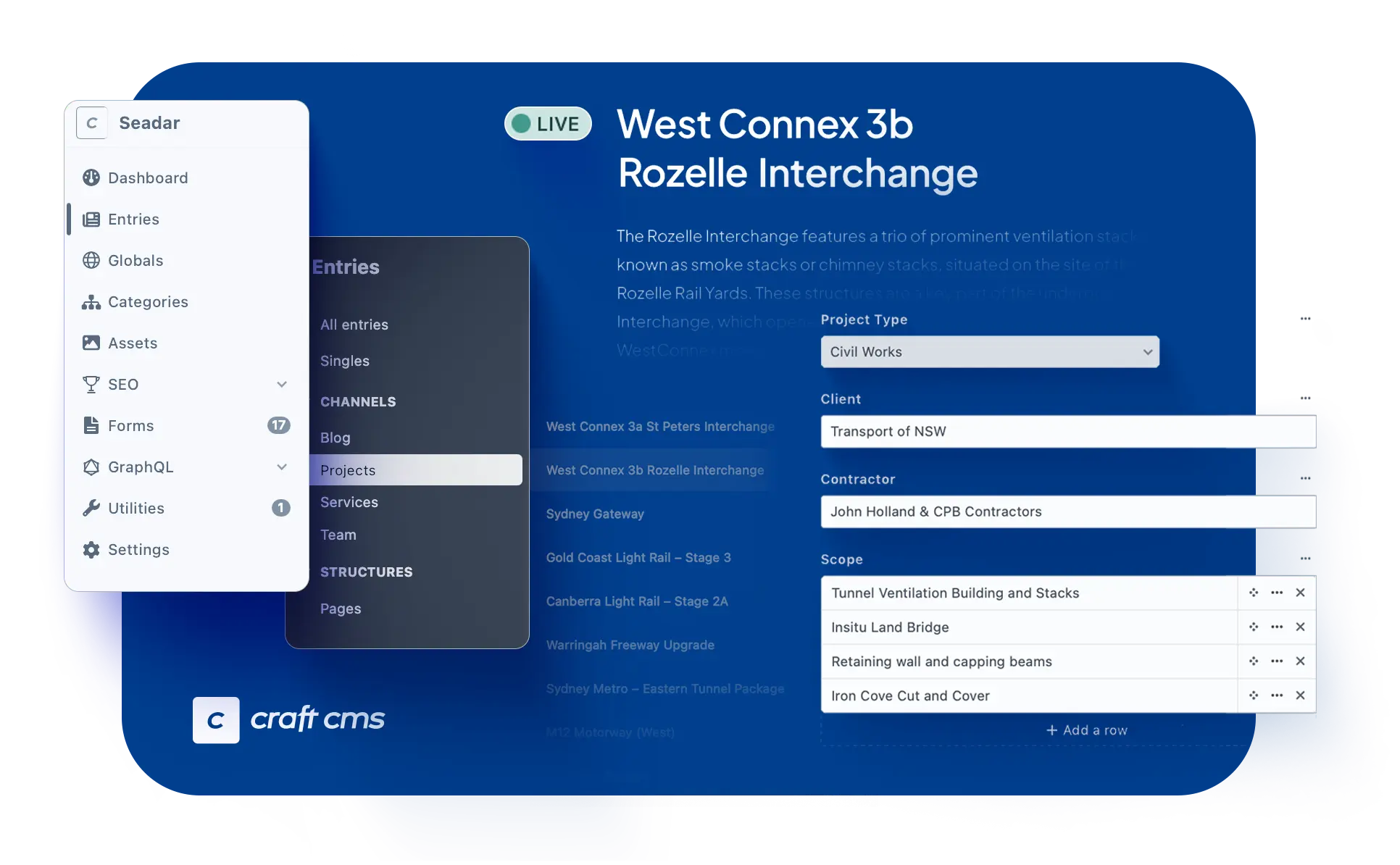
Seadar works on serious civil infrastructure projects. The website needed to show proof clearly: project type, client, contractor, scope, capabilities, certifications, safety culture, team, services and new work as it comes in.
That’s a content architecture problem.
We built the site around a structured Craft CMS model. Each entry in the Projects channel is captured the same way Seadar describes its work.
The team can keep publishing new infrastructure projects without touching code or reinventing the format each time.
Content engines need human expertise too
Structure doesn’t make the content mechanical.
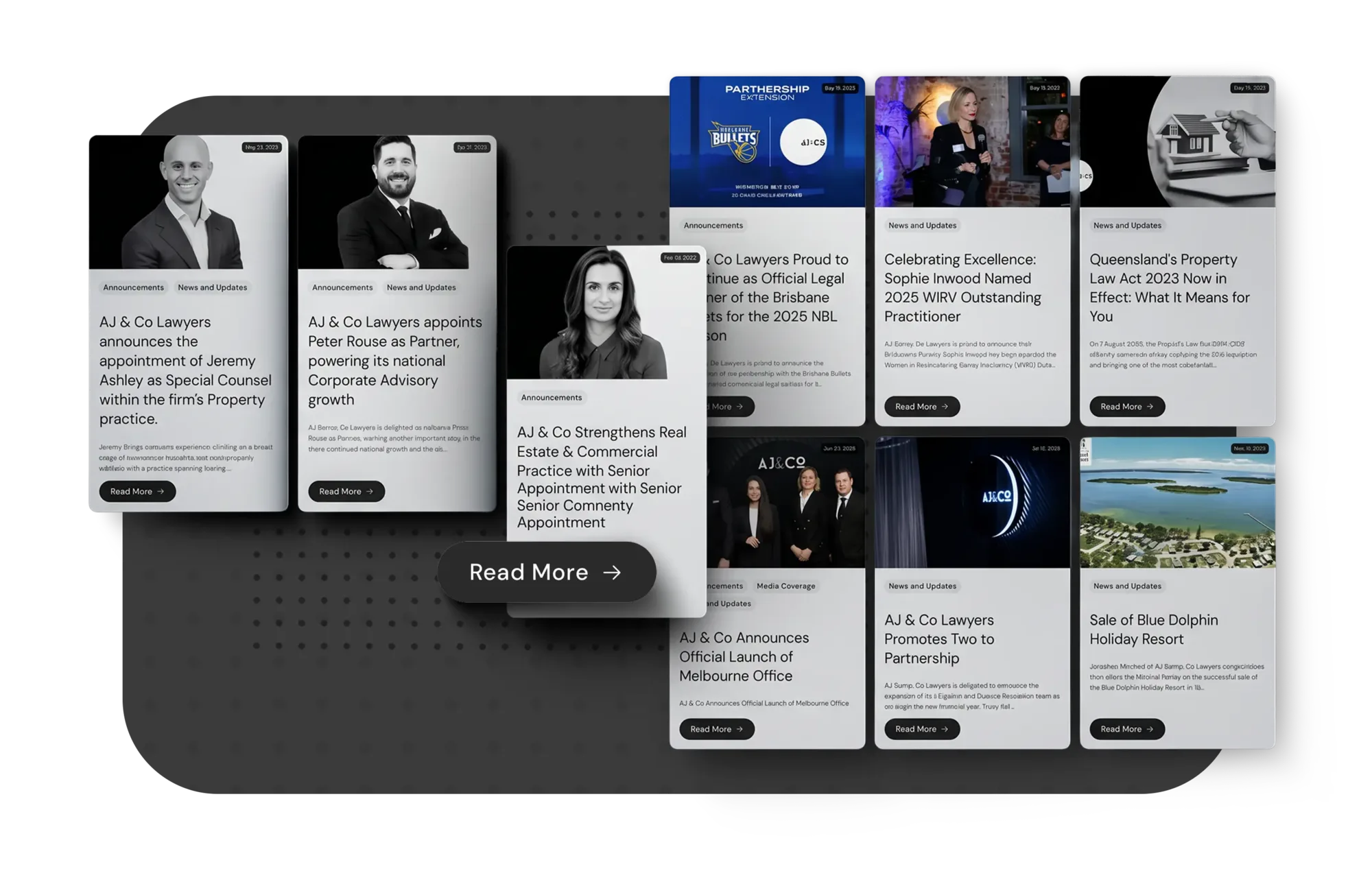
AJ & Co. shows the editorial side of the same idea. The firm’s website is built around partner presence, plain answers and insights the lawyers can keep adding. The system gives the firm a way to publish its expertise without turning every update into a production line.
Expertise-led brands need somewhere for their thinking to live.
AI makes structure more important, not less
Kantar’s 2026 marketing trends point to Generative Engine Optimisation, or GEO, as a new pressure on brands. If AI assistants and answer engines are helping people discover, compare and choose, brand information needs to be clear, structured and easy to interpret.
The fix is the same one that helps people: make the brand easier to understand everywhere. Clear service pages, structured product information, case studies that explain the work properly and FAQs that answer the questions people ask. Metadata shouldn’t be an afterthought either.
The same things that help people also help machines understand what the brand means.
Well-known public systems prove the point
GOV.UK’s Service Manual is a strong public example of a system built to help teams make better services. It includes guidance across accessibility, agile delivery, design, measuring success, technology, user research and service standards.
It’s a service manual rather than a brand guideline, and it shows what mature systems do: they help many people make consistent decisions over time.
Apple's #ShotOniPhone campaign is a different kind of content engine. The product behaviour becomes personalised content, and millions of users share their own version of the story.
Different category, same direction.
The system creates the content.
A good system keeps the brand alive
The test comes after launch day: month six, month twelve, the next hire, or the next time someone needs to make something quickly and the brand team is busy.
A good system helps the work stay good after the first presentation. It gives people the tools to keep moving without guessing.
That’s why content models, CMS design, templates, brand hubs and editorial structures deserve to be treated as brand work.
They’re how the creative survives contact with the real world.