

The best brands are learning to listen better
Brands love to talk. But a lot of the best brand work starts earlier, with listening: questions, patterns and feedback that the smartest brands turn into stronger work.

 Words:
 Brands like to talk.
That’s understandable. A brand has things to say: what it does, what’s changed, what people should buy or believe.
But a lot of the best brand work starts before the talking, with listening.
Listening properly means paying attention to the questions, objections, sales conversations and support requests where people tell you what they need in their own words.
That material is valuable. It’s also easy to waste.
Listening is becoming a growth behaviour
The Drum’s 2026 social media trend coverage makes a good point: the social advantage is shifting from posting more to listening better. The article describes audiences as co-creating, questioning and holding brands accountable in real time.
That’s a positive shift if brands treat it properly.
Beyond managing risk, listening can improve content, product, service design and brand language.
A question in the comments can become a better FAQ, and a repeated sales objection can become a stronger landing page. Sometimes a phrase from the community makes better copy than anything written in a workshop.
The brand gets clearer when it pays attention.
Design can make listening easier
For Andromeda Robotics, listening had to be designed into the experience.
Andromeda needed to introduce Abi, a companion robot for aged care, to people who may not have known what to expect. Some would be curious, some cautious, and some unsure whether a robot belonged in that setting at all.
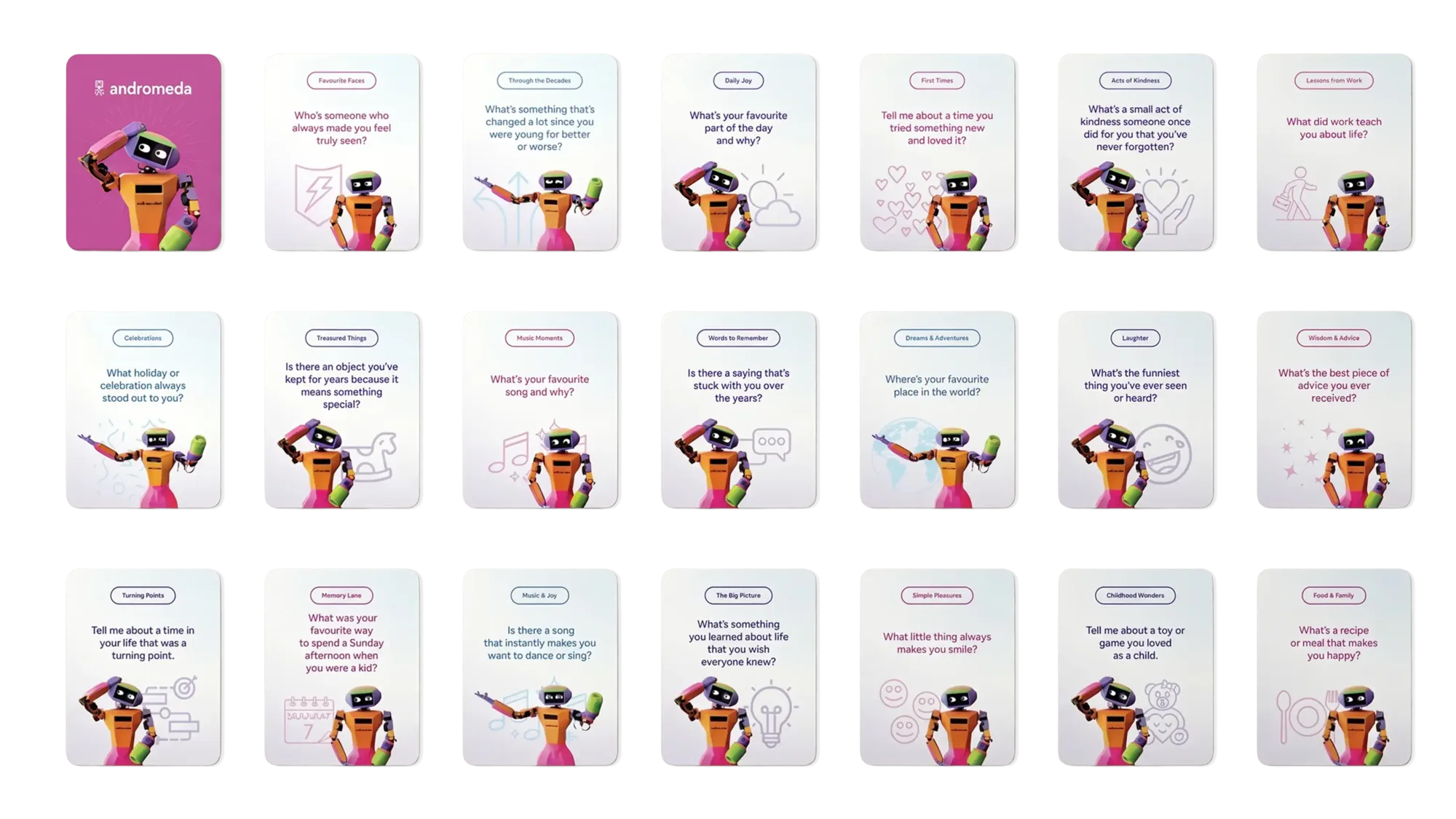
The answer was a set of conversation cards.
Analogue cards for a digital companion. Every card a question. Every question a way into a story.
That made the first meeting warmer. It gave people something to hold, ask about and share.
Questions are brand assets
A good question can do a lot of work. It can lower the pressure in a room and make a technical product feel approachable. It shows the brand is interested in the person.
That’s especially important when the product or service is unfamiliar.
In Andromeda’s case, the question cards helped introduce a companion robot the way you’d introduce a friend. That reframes the job: the work was to create the conditions for connection.
It’s a lesson for many brands.
Sometimes the smartest thing a brand can do is invite people in.
Listening has to go somewhere
The weak version of listening is collection without change: surveys run, feedback gathered, nothing moves.
That creates fatigue. People can tell when a brand is asking questions only because the process says it should.
The stronger version closes the loop.
If people keep asking the same thing, the website should answer it better. If the same confusion keeps coming up in sales calls, the messaging should change.
Listening becomes valuable when it changes the system.
Well-known brands show the same pattern
Duolingo is a good outside example because the brand behaves like it’s in constant conversation with its audience. Its press room shows campaigns, animation, illustration and brand assets. The product is educational, but the brand has built a public character people can respond to.

Spotify Wrapped works in another way. It turns listening behaviour into a moment people want to share. The brand reflects personal use back to the user, then lets millions of people spread that story.
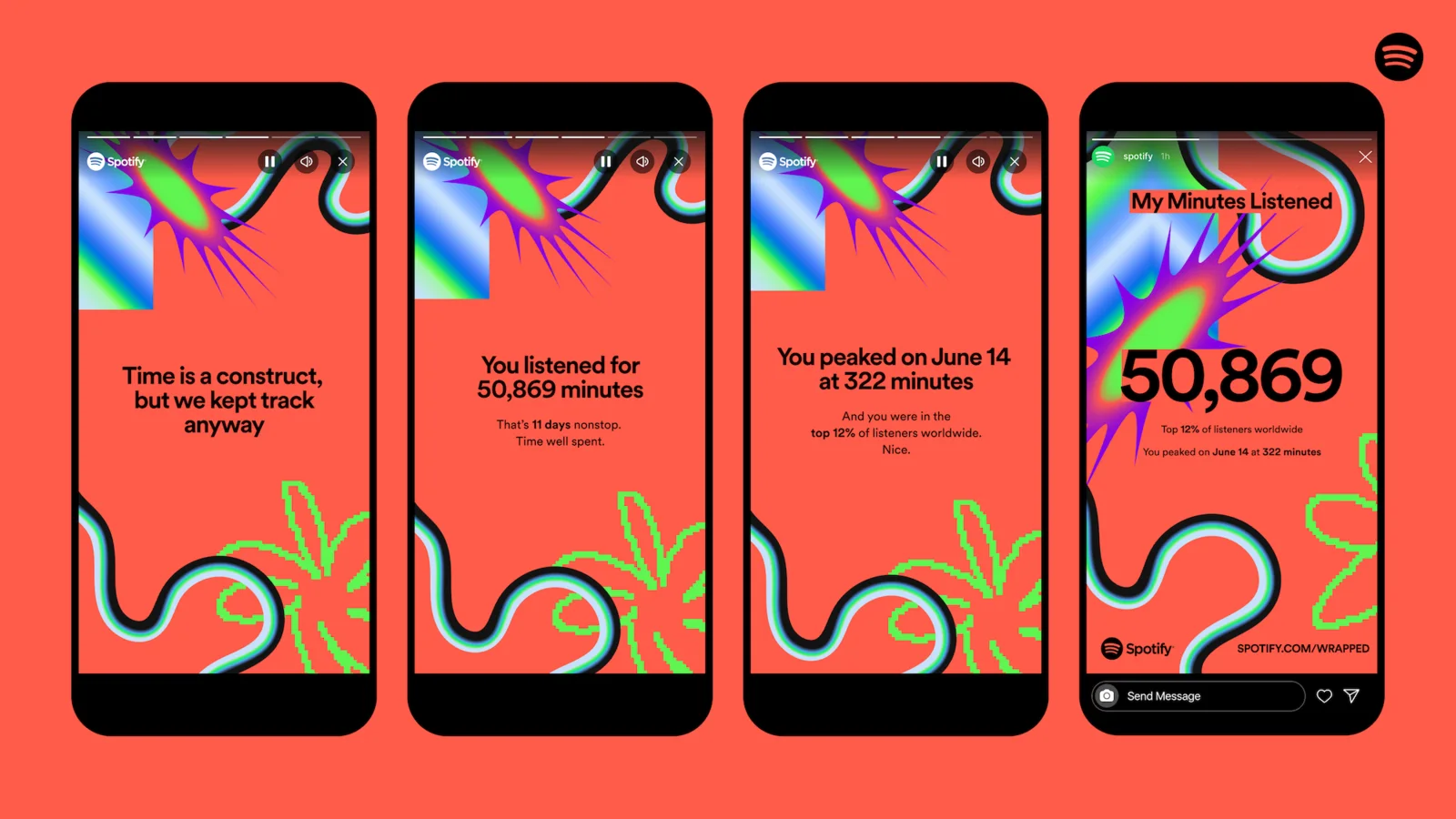
Both examples are different from Andromeda, but the principle is similar.
Brands get stronger when they treat audience behaviour as material, not noise.
Good listening takes judgement
Good listening needs tools, but it also needs judgement. Someone has to know what’s a one-off complaint, what’s a pattern and what should be protected.
That’s where brand and service design meet.
The best brands hear enough to respond well. Then they make the response visible in the work.